
Water Damage Restoration Independence MO
When indoor flooding strikes, our certified technicians mobilize rapidly to extract standing water and stabilize saturated building materials. We dry deep structural pathways thoroughly before finishes are reinstalled.
Phone (816) 555-0178 when you find it.
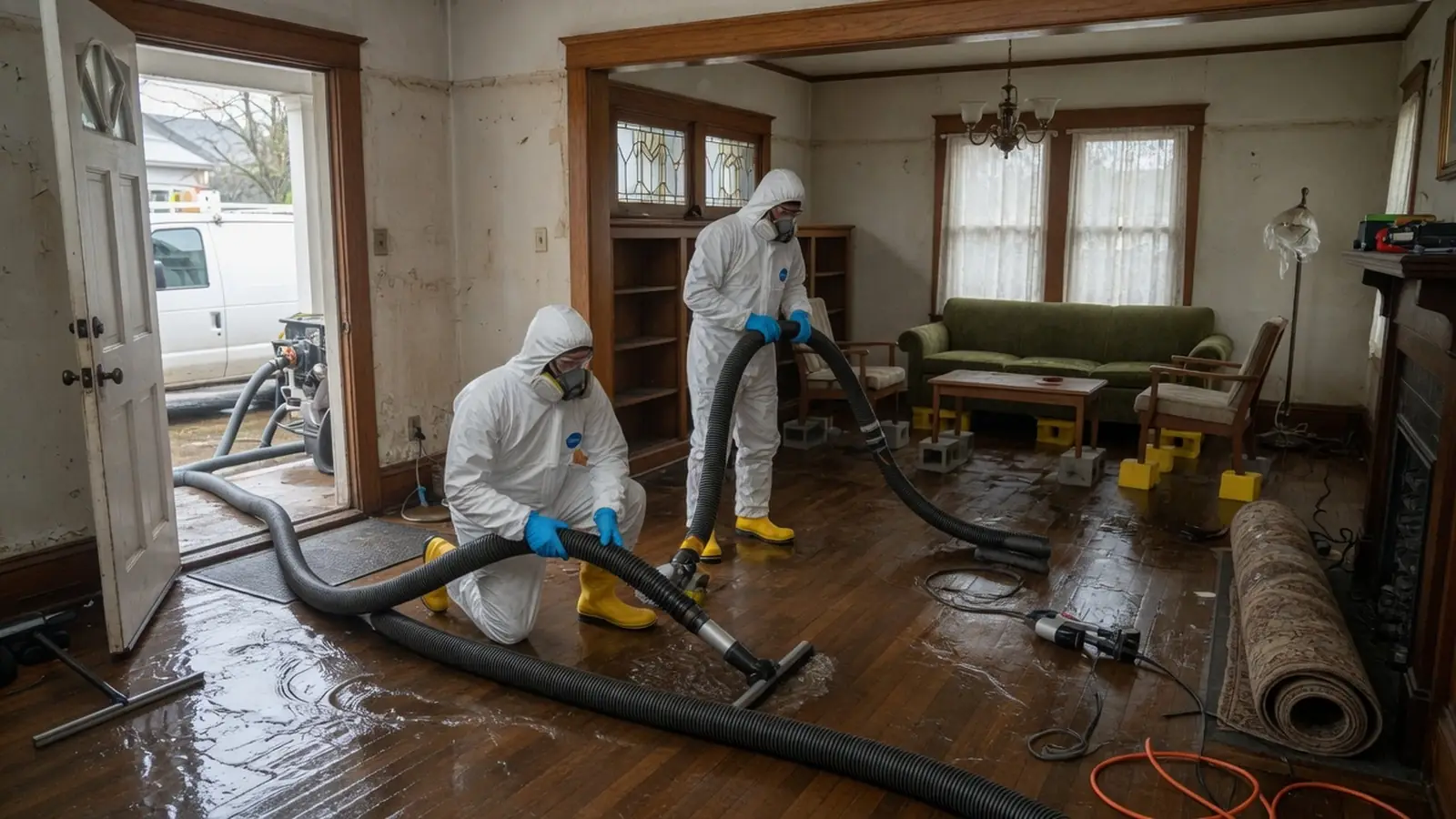
Precision Structural Drying
Our restoration technicians bring dedicated field experience to properties impacted by sudden plumbing failures and overland flooding.
About 35% of housing units locally (19,827 of 55,913) were built before 1960, the era of galvanized steel supply lines and cast iron drains.
About 20% of housing units locally (11,137 of 55,913) were built in the 1960s, overlapping the years aluminium branch wiring was installed.
About 26% of housing units locally (14,635 of 55,913) were built in the 1970s and 1980s, overlapping the years polybutylene supply piping was commonly installed.
About 82% of housing units locally (45,599 of 55,913) were built before 1980, the period when asbestos-containing materials and lead paint were still in use.
During severe seasons, storm groundwater persistently seeps across foundation seams and slab joints, leaving property owners questioning whether to cut drywall or bring in extraction equipment.
When severe weather strikes, addressing structural storm damage quickly prevents compounding structural loss.
Our crews use high-capacity extraction units and thermal cameras to identify the exact migration path of trapped water.
Every project concludes with daily moisture logging until wood framing and subfloors return to stable equilibrium.
Our Proven Drying Protocol
If heavy ground runoff has submerged lower living areas, stabilizing residential basement flooding is our first operational priority. The dominant mapped soils across our county area (MO095) by acreage are Snead-Rock outcrop complex, warm, 14 to 30 percent slopes; Sibley-Urban land complex, 2 to 5 percent slopes; Arisburg silt loam, 1 to 5 percent slopes; Sibley-Urban land complex, 5 to 9 percent slopes. The single most extensive soil unit mapped around our area is Snead-Rock outcrop complex, warm, 14 to 30 percent slopes, covering about 19,955 acres of MO095. Local property owners frequently report how severe storm runoff can rapidly overwhelm drainage and fill basements with standing water, putting finished drywall and building materials at risk.
- Envelope Sealing And Damage Inspection. Structural drying cannot begin effectively until the exterior building envelope is sealed through emergency tarping and board-up to prevent additional wind-driven rainwater intrusion. Technicians map moisture migration across subfloors and wall cavities using calibrated diagnostic sensors.
- Water Extraction And Controlled Demolition. As seen during intense weather events, severe weather inundation ruins carpeting and saturated lower drywall sections in finished basements, necessitating immediate tear-out and mitigation. Our team extracts bulk standing water with truck-mounted pumps and performs clean flood cuts to open saturated wall voids.
- Industrial Dehumidification And Evaporation. We position commercial low-grain refrigerant dehumidifiers and high-velocity air movers to create optimal vapor pressure differentials. This continuous airflow pulls deep moisture out of structural joists, sill plates, and concrete slabs.
- Moisture Verification And Surface Sanitization. Daily psychrometric readings track drying progress until every structural member reaches dry standard equilibrium. All exposed framing is treated with broad-spectrum botanical antimicrobials before the space is cleared for rebuilding.
Disciplined Structural Recovery
Our team adheres strictly to industry psychrometric guidelines rather than arbitrary timelines. Because lingering trapped moisture behind wall cavities leads to microbial growth, our team works to ensure you can learn more about our containment standards before remediation becomes necessary. We never rush to close walls until every subfloor, stud, and sill plate logs compliant baseline moisture readings.
Basement Flood Recovery
Storm-related grid outages disable primary sump pumps during critical downpours, causing rapid basement flooding that requires emergency extraction. We remove pooling water and sanitize submerged floor plates quickly to halt structural rot.
Storm And Hail Mitigation
NOAA radar recorded 2,036 hail signatures within about 15 miles between 2021-2025 (2021: 379, 2022: 114, 2023: 549, 2024: 617, 2025: 377). The heaviest recent hail year around our sector was 2024, with 617 radar hail signatures inside a 15-mile radius, making rapid roof tarping and structural water extraction essential.
Structural Cavity Drying
Hidden moisture trapped inside insulated walls or under glued flooring causes progressive structural framing decay. We use targeted injection drying systems and thermal imaging to extract hidden vapor without unnecessary tear-out.
Our Commitment To Verified Structural Drying
We measure success through precision diagnostic data, tracking temperature, relative humidity, and moisture content until building materials reach target equilibrium.
- 9Zip Codes Served
- 6Service Areas
- 3Services Offered
Real feedback from property owners who experienced emergency water mitigation under our care.
“When our supply line ruptured behind the kitchen wall, the crew had drying equipment running within two hours. I already referred my next-door neighbor to them after seeing how thoroughly they documented every moisture reading. Having someone that dependable in an emergency made all the difference.”
Marcus T.
“A previous contractor had left soggy baseboards and wet drywall in place, claiming the room would air out on its own. This company came in, cut away the contaminated materials cleanly, and dried the underlying framing before mold could take hold. They completely turned a botch job into a safe home again.”
Elena R.
“The written estimate we received on day one matched our final invoice down to the penny. The team walked us through the exact scope before turning on a single dehumidifier, so there were zero surprise change-orders. That level of transparency is rare in emergency home repairs.”
Darren K.
“Every evening before heading out, the crew swept the work areas, taped down cables, and organized their air movers so we could still walk through our hallway safely. They treated our living space with genuine respect during a chaotic week. You could tell they cared about keeping our family comfortable.”
Brenda M.
Frequently Asked Questions
Does surface stormwater that flows into the home from outside require treatment as Category 3 black water rather than clean rainwater?
Yes, outdoor stormwater runoff collects contaminants and soil microbes before entering a structure, classifying it as Category 3 black water. Professional mitigation requires complete sanitary extraction, antimicrobial washdown, and regulated disposal.
How quickly must water mitigation begin to avoid secondary structural damage?
Mitigation must start within twenty-four to forty-eight hours to halt mold growth, drywall degradation, and deep structural subfloor saturation. Immediate extraction and airflow stabilization prevent moisture from penetrating sill plates, joists, and electrical conduits.
Why must older regional homes receive specialized moisture inspections?
Older residences often have vintage plaster, legacy wiring, or aging plumbing that require delicate extraction and regulated material safety handling. Moisture trapped behind dense masonry or vintage drywall can foster hidden decay without showing immediate surface staining.
Can saturated basement drywall and wall framing be dried in place?
Drywall saturated with contaminated ground runoff must be removed, but underlying wood framing can usually be dried and sanitized in place. Controlled flood cuts several inches above the water line allow dehumidified air to circulate around damp framing studs.
How do technicians verify that structural building materials are completely dry?
Technicians monitor drying progress using calibrated penetrating moisture meters, thermal imagers, and precise relative humidity sensors daily. Drying equipment remains operational until internal moisture readings match baseline dry standards established for the regional climate.