
Independence Basement Flooding
Severe storm runoff can rapidly overwhelm drainage and fill basements with standing water, putting finished drywall and building materials at risk. Our emergency crew extracts standing liquid immediately, strips saturated baseboards, and deploys structural drying equipment to protect your foundation. We stop secondary moisture damage before rot sets into subfloors and structural framing.
Shut off the main, then call (816) 555-0178.
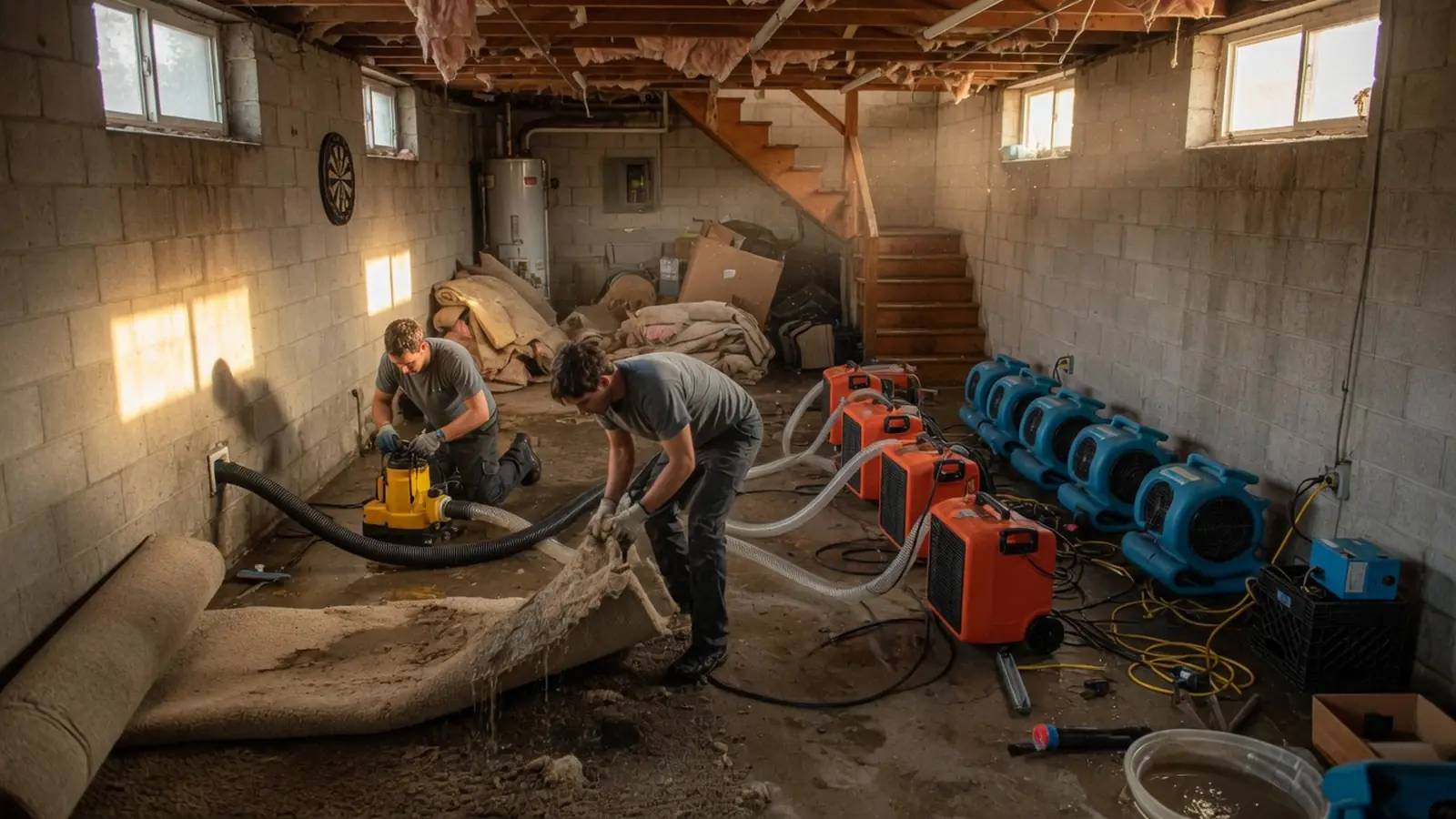
Direct Basement Water Removal
Older properties with stone or concrete foundations regularly face severe hydraulic pressure during heavy seasonal downpours.
A pattern echoed in public discussions is that torrential rain causes municipal storm and sewer water to back up through residential basement floor drains, creating contaminated standing water and foul odors.
Storm groundwater persistently seeps across foundation seams and slab joints, leaving property owners questioning whether to cut drywall or bring in extraction equipment.
Our crew responds immediately with commercial submersible pumps and deep extraction wands to pull moisture from subfloors before structural decay begins.
You can explore our complete water damage restoration support to understand how we inspect hidden moisture paths behind finished walls.
Every project concludes with moisture meter verification across all concrete slabs and framing sill plates to ensure complete dryness.
Step-by-Step Basement Restoration
Severe weather inundation ruins carpeting and saturated lower drywall sections in finished basements, necessitating immediate tear-out and mitigation. We follow a strict systematic protocol to remove standing floodwater, discard compromised porous items, and dry structural framing.
- Standing Water Pumping. Homeowners often describe how a failed sump pump allows standing water to accumulate several inches deep, raising questions about whether consumer dehumidifiers can prevent structural rot. We deploy high-volume submersible pumps and truck-mounted extractors to drain water fast before structural timbers absorb heavy moisture.
- Flood Cuts And Demolition. Standing flood water soaking carpets and baseboards leaves homeowners uncertain whether air drying is adequate or if drywall must be cut out 12 to 24 inches up. We perform precision flood cuts above the moisture line and haul away ruined drywall, baseboards, and saturated insulation.
- Antimicrobial Treatment And Mold Defense. Demolishing water-damaged drywall after a basement flood often exposes active mold spreading along internal wall framing and wet insulation. When organic growth is identified, our targeted remediation protocol stops fungal spread using botanical antimicrobial solutions across every exposed stud.
- Structural Air Movement And Dehumidification. We position industrial centrifugal air movers and low-grain refrigerant dehumidifiers to draw bound moisture out of concrete slabs and sill plates. Technicians track relative humidity and moisture content daily until dry standards are achieved.
Scientific Moisture Removal Standards
If heavy outdoor runoff caused the intrusion, learn how our storm recovery specialists handle sudden flash flooding. Our team adheres strictly to professional structural drying standards without taking shortcuts or making unverified claims. We verify that wall cavities and subfloors reach baseline moisture levels using non-invasive thermal imaging and calibrated resistance meters.
Emergency Water Pumping
Rapid removal of pooling water using industrial submersible pumps and heavy-duty extraction units. We clear standing water from utility rooms, finished spaces, and crawl areas.
Finished Basement Demolition
Safe removal of water-logged drywall, ruined padding, saturated carpet, and swollen trim. We bag and dispose of contaminated porous materials following sanitary protocols.
Subfloor And Slab Drying
Deep structural dehumidification designed to draw deep moisture out of porous concrete and floor joists. We prevent subfloor buckling and long-term dry rot with balanced airflow.
Our Approach To Basement Restoration
Every basement water emergency requires thorough moisture extraction and verified structural drying. Our team arrives equipped with commercial dehumidifiers and high-volume extractors to stabilize your home quickly and protect building framing.
- 12Zip Codes Served
- 6Service Areas
- 3Services Offered
Homeowners share their experiences with our emergency flood extraction and structural drying services.
“Another company had left soggy baseboards and wet framing hidden behind half-cut drywall after our lower level flooded. The crew came in, removed all the neglected damp materials, and completely dried the space within days. Their thorough inspection caught moisture pockets the first contractor completely overlooked.”
Marcus T.
“Getting an honest assessment made all the difference when storm water backed up through our drain. The team quoted the entire extraction and containment scope clearly without tacking on surprise change-orders later. What they estimated at the start was precisely what we paid.”
Brenda K.
“Every evening before packing up, the crew vacuumed walkways and neatly stacked their air movers so we could still move around safely. They hauled all wet insulation straight to their trailer instead of piling trash on our lawn. Having our home respected during such a stressful situation was a huge relief.”
Darren S.
“Constant updates kept us completely reassured throughout the entire structural drying process. The crew texted moisture meter photos and humidity readings every single morning so we never had to chase anyone down for answers. That level of transparency made a terrible flood much easier to manage.”
Elena R.
Frequently Asked Questions
Can water-soaked carpeting and pad in a flooded basement be dried in place, or must the pad be removed immediately to prevent subfloor rotting?
Water-soaked carpet padding must be removed immediately because dense foam traps moisture against the subfloor and causes rapid structural rotting. While synthetic top carpet can occasionally be salvaged if treated promptly with clean water extractions, saturated bonded urethane pad loses its integrity and harbors microbial growth. Removing the wet pad allows air movers to dry the underlying concrete or subflooring directly.
How long does professional basement water extraction and drying take?
Basement water extraction and structural drying typically requires three to five days depending on water depth and building material saturation. Pumping standing water takes only a few hours, but drawing trapped moisture from framing studs and concrete foundations requires industrial dehumidification equipment running continuously until moisture meters confirm standard dry readings.
Why does water back up through basement floor drains during heavy rain?
Floor drains back up when heavy storm runoff overwhelms municipal sewer systems, pushing contaminated wastewater backward into low residential pipes. This drain backup creates biohazard conditions that require immediate extraction, disposal of porous building materials, and thorough sanitization with EPA-registered antimicrobial wash down.
Will a standard household dehumidifier dry a flooded basement?
Residential dehumidifiers lack the air volume and grain capacity required to prevent rot and mold growth after several inches of standing water. Consumer units only remove a few pints of water each day and freeze up under continuous load. Commercial low-grain refrigerant systems pull dozens of gallons daily and force dry air deep into wall cavities.
How do technicians determine if drywall must be cut out after a basement flood?
Technicians measure moisture levels behind walls and execute a flood cut 12 to 24 inches above the water mark if gypsum board is saturated. Gypsum drywall wicks moisture upward rapidly. Removing ruined lower wall sections prevents trapped dampness from rotting wood wall framing and feeding hidden fungal colonies behind baseboards.