
Independence Mold Remediation
Hidden moisture behind walls and beneath flooring creates rapid fungal growth that threatens indoor air quality and structural integrity. Our certified technicians isolate contaminated zones, set up negative air scrubbers, and safely extract hazardous growth. We restore healthy living conditions with thorough containment and zero guesswork.
Call (816) 555-0178 to arrange an inspection.
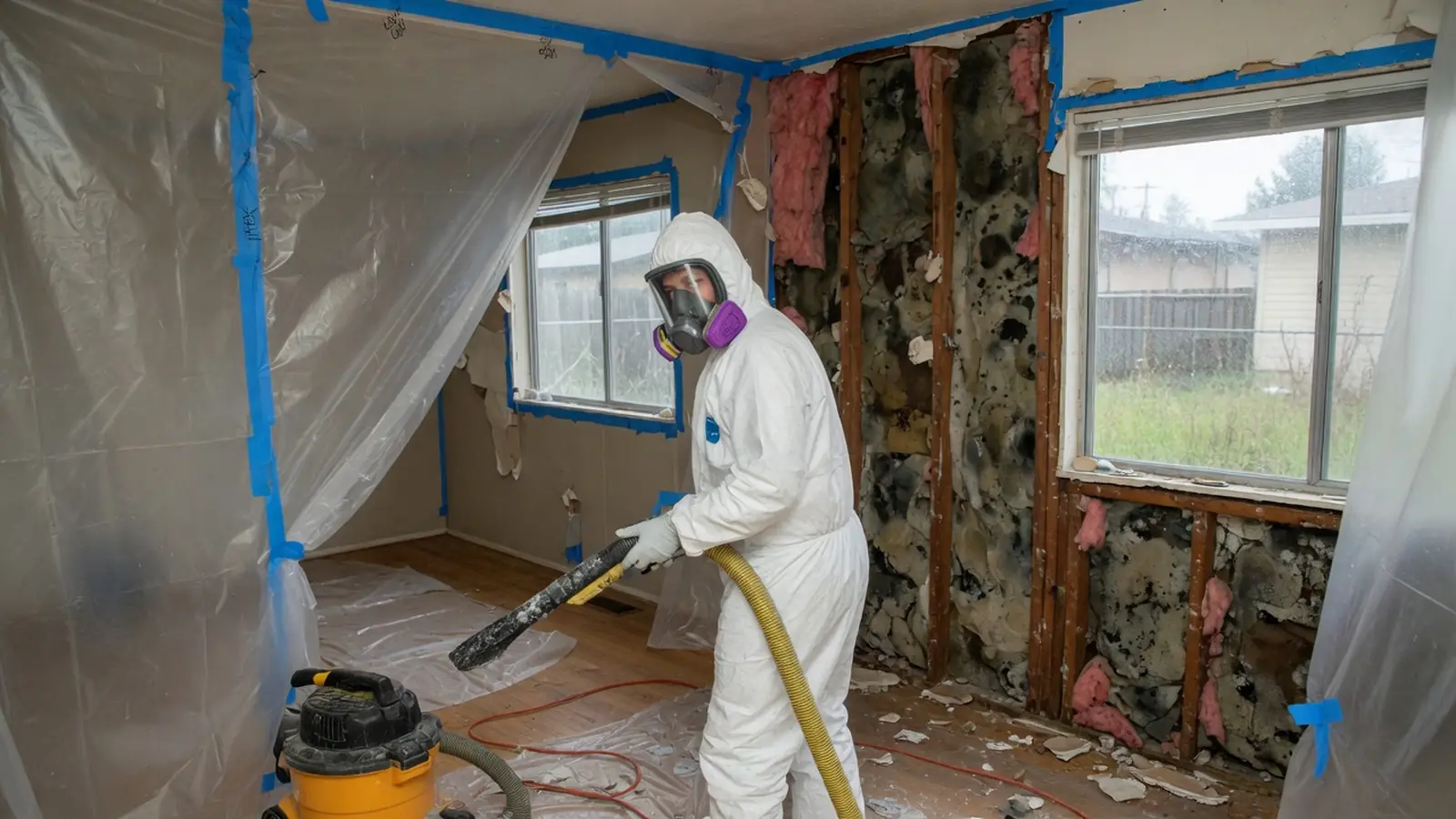
Dedicated Remediation Craftsmen
Census ACS 5-year estimates record 55,913 housing units across our local service territory.
About 10% of housing units locally (5,381 of 55,913) were built since 2000, so a substantial share of the local stock is still on its original systems and prone to aging pipe failures.
Following water intrusion, moisture trapped behind baseboards creates concerns about hidden fungal growth requiring objective testing rather than sales pressure.
As homeowners often describe in public discussions, incomplete DIY drying with household fans traps moisture under subfloors and behind trim, resulting in secondary mold patches and musty odors.
Our crew delivers comprehensive water damage restoration and moisture extraction backed by commercial engineering controls.
Every remediation project begins with precision moisture mapping to establish true drying baselines without damaging unaffected finishes.
We handle hazardous growth systematically so families can breathe clean indoor air with complete confidence.
Structured Steps For Total Fungal Elimination
Our methodical remediation workflow follows established industry engineering controls to safely diagnose, isolate, and eradicate fungal hazards from residential structures.
- Thorough Moisture And Contamination Inspection. Our technicians utilize non-invasive moisture meters and thermal imaging to map wet zones and trace dampness back to its point of origin. As homeowners frequently notice after plumbing failures, demolishing water-damaged drywall after a basement flood often exposes active mold spreading along internal wall framing and wet insulation. When mitigating severe basement flooding, we pinpoint the full perimeter of hidden moisture before physical demolition begins.
- Controlled Containment And Air Scrubbing. Proper mold remediation isolates the affected zone with six-mil poly barriers and negative air scrubbers exhausted outdoors to prevent cross-contaminating unaffected living spaces. We create airtight physical enclosures and maintain continuous negative pressure so spores cannot migrate into adjacent hallways or supply vents. Industrial air filtration units run continuously to capture airborne particles as small as zero-point-three microns.
- Selective Demolition Of Colonized Materials. Porous building materials such as drywall and insulation colonized by active fungal hyphae cannot be effectively sanitized and must be removed under controlled containment. Our technicians double-bag all compromised elements inside the sealed chamber before transporting them for disposal. This careful protocol ensures that structural framing is stripped clean without distributing dust through the residence.
- Deep Surface Sanitization And Clearance Verification. Technicians HEPA vacuum all exposed framing studs, joists, and subfloors before applying hospital-grade antimicrobial wash to eliminate remaining microbial traces. Dehumidifiers remain running until framing moisture content drops to safe equilibrium levels. We verify that all building cavities are dry, deodorized, and thoroughly prepared for rebuilding.
Disciplined Containment And Proven Workmanship
When heavy rainstorms hit, a failed sump pump allows standing water to accumulate several inches deep, raising questions about whether consumer dehumidifiers can prevent structural rot. Standard residential appliances simply lack the extraction capacity needed to protect structural framing against deep spore colonization. Our approach pairs emergency storm damage cleanup with hospital-grade negative air scrubbers and EPA-registered antimicrobials. We adhere strictly to national restoration standards, establishing containment barriers before disturbing any fungal colonies to guarantee your living areas remain completely protected.
Negative Air Containment
We isolate contaminated areas using heavy plastic barriers and commercial negative air machines equipped with HEPA filtration. This containment prevents fungal spores and microscopic debris from spreading into clean living quarters during cleanup. Exhaust ducting safely directs filtered airflow outside the building envelope.
Porous Material Extraction
Drywall, insulation, and carpet harboring deep root systems cannot be saved through surface cleaning alone. We carefully cut out and bag contaminated building components inside the containment zone under controlled conditions. This targeted removal prevents hidden decay from lingering behind finished wall assemblies.
HEPA Vacuuming And Antimicrobial Treatment
After removing unsalvageable materials, our crew cleans all exposed framing studs and subfloors using industrial HEPA vacuums. We apply EPA-registered antimicrobial solutions to eliminate remaining surface spores and inhibit future colony formation. Detailed physical scrubbing ensures structural framing is ready for reconstruction.
Committed To Safe And Methodical Property Restoration
We approach every microbial contamination project with strict engineering controls, testing protocols, and containment standards. Property owners can expect disciplined moisture tracking, thorough HEPA filtration, and transparent communication from the initial inspection through final clearance testing.
- 8Zip Codes Served
- 6Service Areas
- 3Services Offered
Recent feedback from local property owners who experienced our structural drying and microbial containment protocols firsthand.
“While pulling out the soaked baseboards in our basement, the crew uncovered a colony of black mold climbing straight up the interior framing studs. Instead of panicking or stalling the project, they immediately updated the containment zone and walked us through the safe remediation plan without any fuss. Their calm professionalism turned an intimidating discovery into a manageable repair.”
Marcus T.
“We had a strict home inspection deadline closing in for the sale of our property and needed certified fungal remediation finished within seventy-two hours. The team showed up early with industrial scrubbers, worked systematically to clear the air quality clearance test, and handed over all documentation right on schedule. Thanks to their quick turnaround, our buyers signed off without a single objection.”
Elena R.
“A prior contractor had simply sprayed bleach over damp drywall after a plumbing leak and called it cured, leaving behind a persistent musty stench. The crew properly sealed off the hallway, removed the ruined porous wallboard under negative pressure, and treated the structural studs correctly. The air in our house has felt clean and completely fresh ever since.”
Devon K.
“From the initial inspection estimate to the final HEPA vacuuming pass, the pricing remained completely transparent with zero hidden fees. They laid out the exact cost for containment barriers, material removal, and antimicrobial treatments beforehand so there were no surprise change-orders on the final bill. Having an honest contractor stick to their initial quote made the entire cleanup stress-free.”
Brenda S.
Frequently Asked Questions
How quickly can microbial growth develop behind drywall or under subfloors if relative humidity remains above sixty percent after an unaddressed leak?
Fungal colonies develop behind drywall or beneath subflooring within twenty-four to forty-eight hours when humidity stays above sixty percent. Persistent moisture from unaddressed leaks softens cellulose materials, providing ideal sustenance for spores. Immediate containment and rapid structural drying are essential to halt expansion.
How much does professional mold remediation typically cost for a residential home?
Professional residential mold remediation typically costs between one thousand five hundred and six thousand dollars depending on structural spread. Minor isolated patches cost less to treat, whereas extensive contamination requiring subfloor removal, duct cleaning, and multi-room poly containment sits at the higher end of the pricing spectrum.
How long does the complete mold remediation and drying process take?
A standard residential remediation and structural drying project generally takes between two and five days from initial setup to final clearance. Day one focuses on containment isolation and physical material extraction, followed by forty-eight to seventy-two hours of continuous HEPA air scrubbing and industrial dehumidification.
Can painted or surface-sprayed mold simply be left inside wall cavities?
Porous materials with established fungal hyphae cannot be left in place or coated over because underlying roots will continue digesting wall studs. Spraying bleach or cosmetic encapsulants over infested drywall traps moisture inside the wall cavity, allowing active rot to spread unseen until structural framing is severely degraded.
Is independent post-remediation clearance testing necessary before rebuilding?
Independent third-party clearance testing verifies that airborne fungal spore levels have returned to normal ecology before new drywall is hung. A neutral certified industrial hygienist pulls indoor and outdoor air cassettes to objectively confirm that spore counts are balanced, ensuring you never pay for premature contractor sign-offs.